

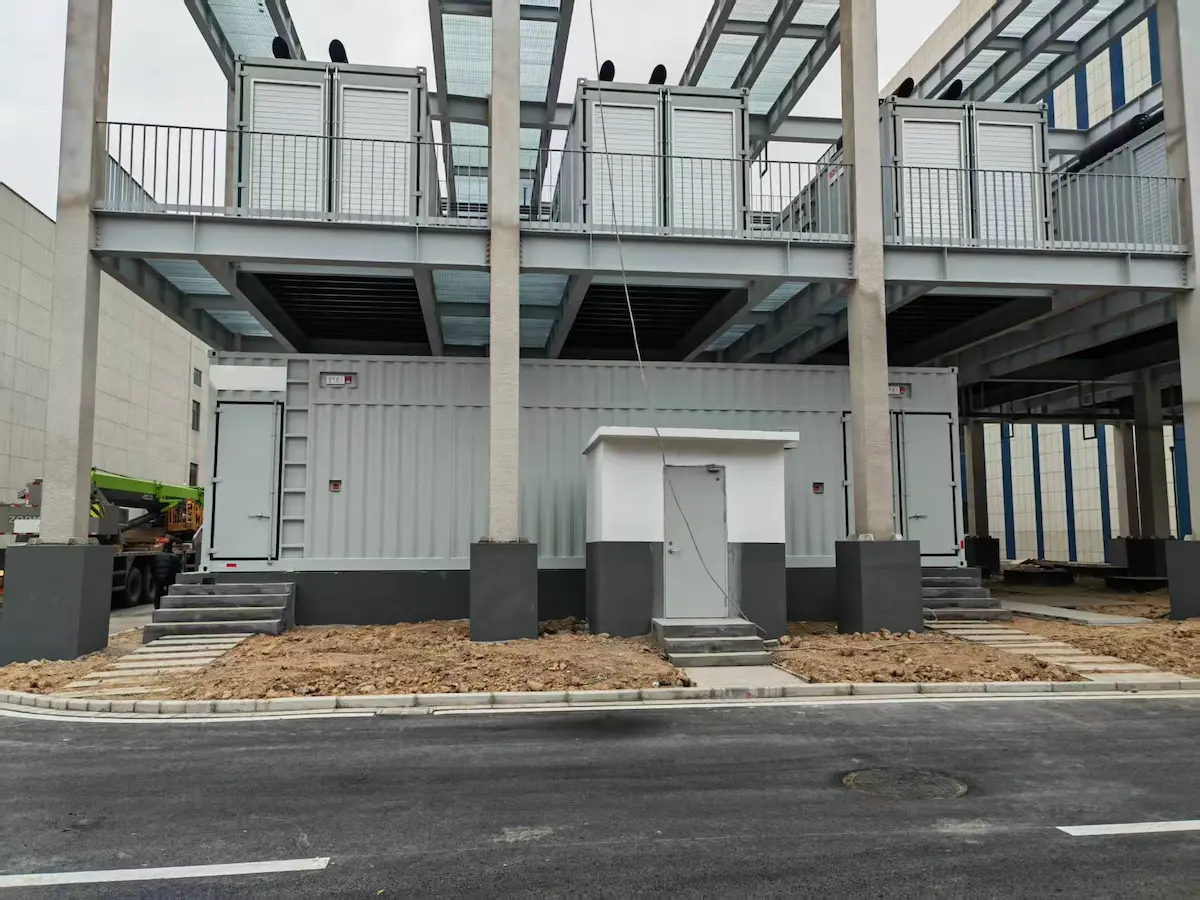
By Anders.Chen, Senior Mission-Critical Power Engineer Last Updated: March 2026
[NOTE] Editorial Disclaimer The technical insights, analogies, and industry critiques presented in this comprehensive guide are based on my personal observations and over 20 years of hands-on engineering experience deploying mission-critical power systems across the globe. They represent my own professional views and do not necessarily reflect the official commercial stances of my employer.
⚡ Executive Summary (TL;DR):
- Standard: Specify ISO 8528-5 Data Center Continuous (DCC) ratings to meet Uptime Tier III/IV. Never rely on Emergency Standby Power (ESP).
- Compliance: EPA Tier 4 Final with SCR is strictly mandatory for grid peak-shaving and heavily regulated zones in North America.
- Sizing: Always calculate pure IT load, apply the facility PUE factor, and add a 20-25% derating margin. Oversize the alternator, not the engine.
- Engineering: Mandate 2/3 pitch alternators and Permanent Magnet Generator (PMG) excitation to defend against UPS harmonic degradation and ensure fault clearing.
📊 Quick Capacity Reference: IT Load to Generator Sizing (2026)
| IT Load (Pure) | Facility PUE | Recommended DCC Rating | Typical Configuration |
|---|---|---|---|
| 500 kW | 1.3 - 1.5 | 800 - 1000 kVA | 1x Standby Unit |
| 1.0 MW | 1.2 - 1.4 | 1600 - 1800 kVA | 1x Large DCC Unit |
| 2.0 MW | 1.2 | 3.0 - 3.5 MVA | 2x Paralleled Units (N+1) |
| 5.0 MW | 1.15 - 1.2 | 7.5 - 8.5 MVA | 4x Paralleled Array |
| 10+ MW | Hyperscale | 15 MVA+ | Distributed Redundant |
💡 Engineer's Note: These figures include a 20-25% environmental derating margin (ambient temperature and altitude). For mission-critical sites, always prioritize the alternator’s kVA capability to handle UPS harmonic loads rather than just the engine's mechanical kW.
📊 Quick Reference: Data Center Generator Selection Matrix
Depending on your facility's architectural goal, your generator specifications must pivot drastically. Here is the cheat sheet for 2026:
Table 1: 2026 Data Center Generator Selection & Sizing Matrix
| Deployment Scenario | Recommended Core Specs | Mandatory Technologies | Compliance & Emissions Baseline |
|---|---|---|---|
| Hyperscale AI & Cloud Core | 3MW - 4MW+, DCC Rating | High Rotational Inertia, PMG Excitation | EPA Tier 2 (Emergency Standby Only) |
| Urban Edge Data Centers | 1MW - 1.5MW, High Power Density | Compact Containerization, Acoustic Attenuation | Local Municipal Noise Ordinances |
| Grid Peak-Shaving / Microgrid | Prime Power or DCC Rating | Master-Master Paralleling, Closed Transition ATS | EPA Tier 4 Final (SCR System Mandatory) |
🚨 Data Center Generator Buying Guide: 3 Critical Engineering Pitfalls for 2026
Before diving into mechanical and electrical specifications, EPC contractors must avoid these three fatal procurement traps that consistently plague data center deployments:
❌ Pitfall 1: The Rating Trap (ESP vs. Uptime Tier III)
Trying to cheat capital costs by using Emergency Standby Power (ESP) rated generators to satisfy Uptime Tier III/IV requirements is a guaranteed way to fail third-party audits. ESP restricts annual runtime to 200 hours.
✔️ The Expert Fix: You must specify ISO 8528-5 Data Center Continuous (DCC) ratings. Think of DCC as an ultramarathon runner—guaranteeing 100% continuous full-load power without any runtime limits during regional blackouts.❌ Pitfall 2: The Sizing Trap ("Lazy Oversizing")
Habitually buying a massively oversized engine simply for a perceived safety margin is a critical error. Oversizing forces the diesel engine to run at perilously low loads, leading to mechanical degradation.
✔️ The Expert Fix: Oversize the alternator, not the engine. Upsizing the alternator provides the necessary fault-clearing and step-load capabilities while keeping the engine properly loaded and burning hot.❌ Pitfall 3: The O&M Trap (Wet Stacking & Fake Testing)
Operating a 3MW generator for a newly commissioned facility drawing only 500kW of actual IT load causes unburned fuel and soot to bake onto the exhaust valves—a lethal condition known as "wet stacking."
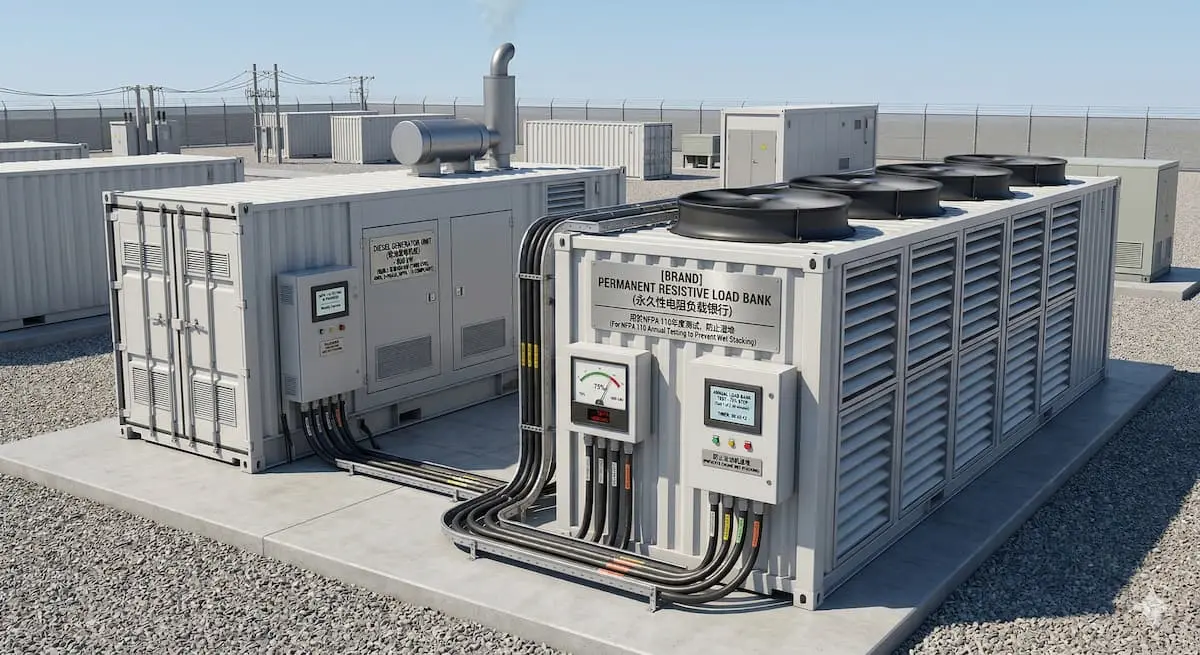
✔️ The Expert Fix: Stop treating NFPA 110 load bank testing as a mere compliance checkbox. Integrate permanent resistive load banks into the initial electrical design to safely burn off soot monthly, eliminating the recurring logistical nightmare of portable rental units.
Introduction: New Challenges for Data Center Standby Generators
What is a Data Center Generator?
A data center generator is a mission-critical backup power system designed to maintain operations during prolonged utility grid failures. To guarantee 99.999% uptime and satisfy strict Uptime Tier III/IV compliance, these megawatt-class engines require a Data Center Continuous (DCC) rating, providing unlimited full-load capacity without any runtime restrictions.
The 2026 AI Paradigm Shift
Driven by global digital transformation, cloud computing, and the explosive growth of Artificial Intelligence (AI), data center infrastructure is undergoing an unprecedented paradigm shift. Traditional data centers typically have per-rack power densities hovering between 5 and 10 kW. Today, however, the rack power density of modern High-Performance Computing (HPC) and AI clusters is rapidly climbing to 100 kW, and even reaching extreme levels of 132 kW to 240 kW.
Imagine this: in today's digital economy, a single minute of an unexpected power outage can trigger millions of dollars in direct financial losses. In my two decades working with Engineering, Procurement, and Construction (EPC) contractors and Mechanical & Electrical (ME) suppliers, I have seen firsthand that this is no exaggeration. Any millisecond of power interruption will not only cause instantly incalculable data loss but also trigger massive SLA violation penalties and irreversible reputational damage.
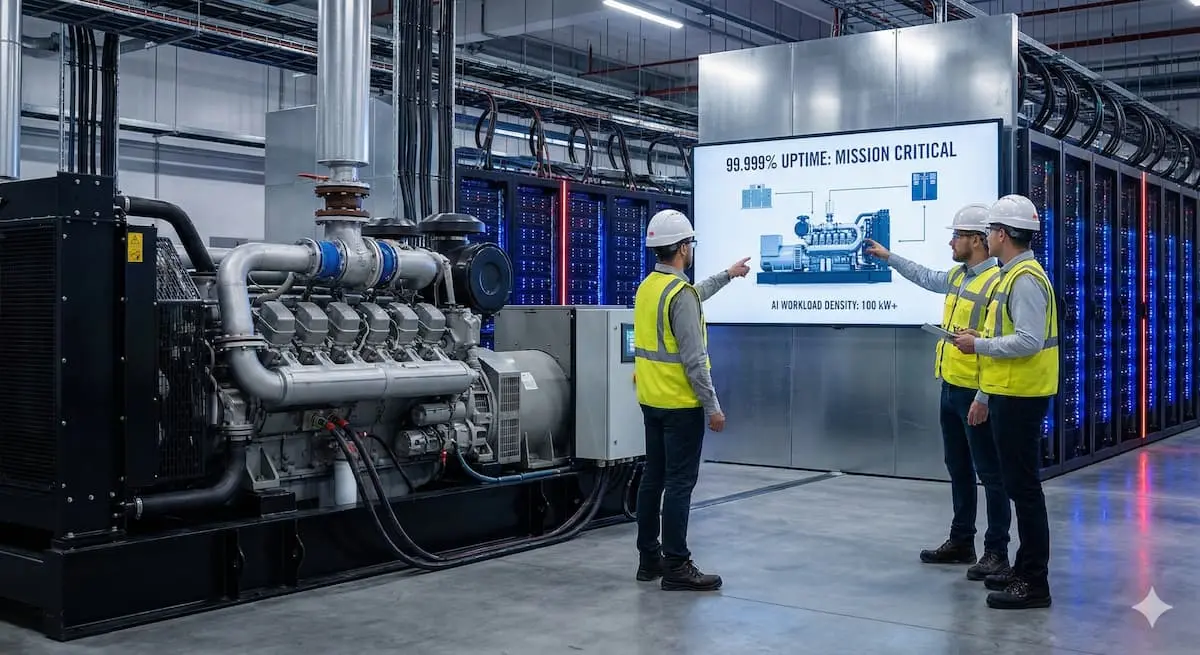
How to Select a Data Center Generator?
Although the utility grid is the first line of defense, my philosophy when engineering large-scale facilities is always built on the assumption that "utility power will inevitably fail." Therefore, as the "last line of defense," a data center generator is a mission-critical backup power system designed to maintain facility uptime during utility outages.
Selecting a data center generator now requires navigating 100 kW rack densities, extreme AI workloads, and stringent 99.999% uptime mandates. EPC contractors must evaluate the facility's Uptime Tier certification, calculate IT load with PUE, and ensure ISO 8528-5 G3 transient response. Understanding transient response, continuous cooling, and supply chain bottlenecks is the only way to avoid catastrophic SLA penalties and facility failures. To guarantee 99.999% uptime, you must prioritize Data Center Continuous (DCC) ratings, advanced distributed paralleling logic, and PMG excitation systems.
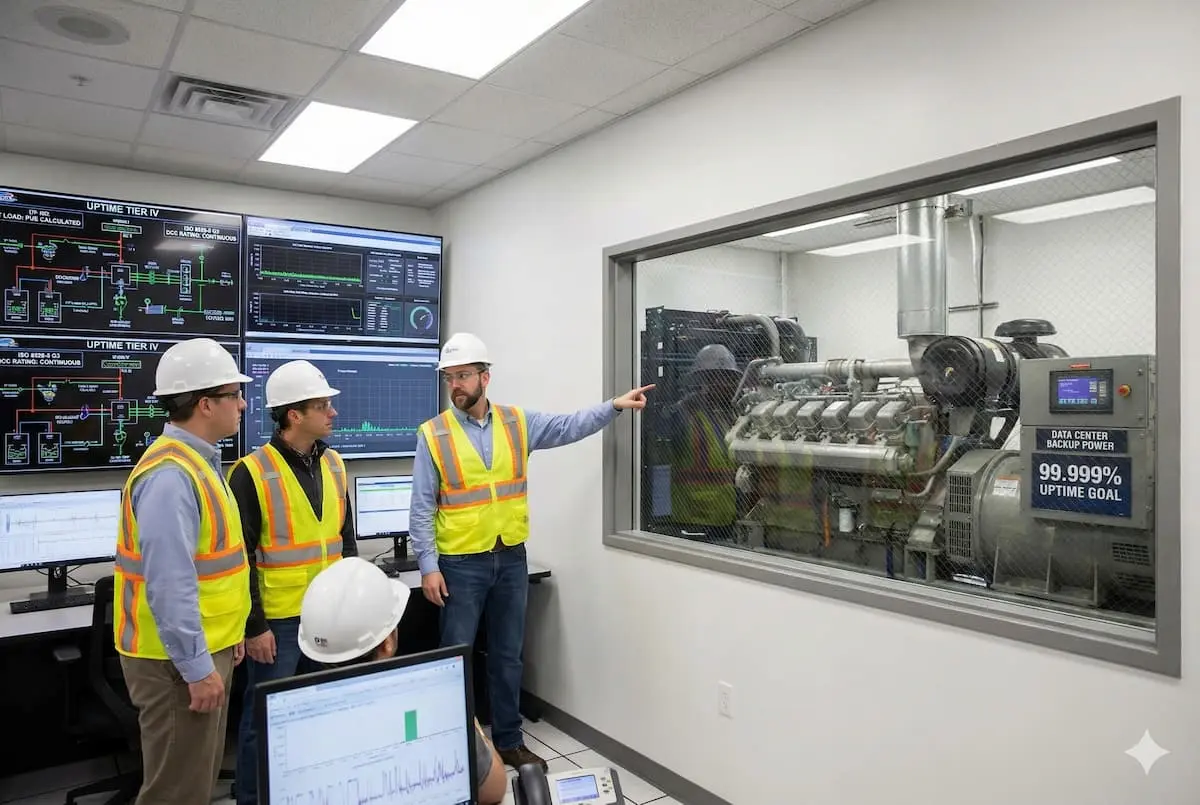
📌 Key Features of a Data Center Generator
What features should a data center generator have? To survive utility grid failures and meet modern mission-critical standards, a reliable data center generator must include the following key features:
- ⏳ Unlimited Runtime Capacity: Rated for Data Center Continuous (DCC) power to operate 24/7 without consecutive hour limits.
- 🚀 10-Second Rapid Startup: Capable of starting and establishing stable voltage and frequency within exactly 10 seconds (NFPA 110 Type 10).
- 🛡️ Robust Transient Response: Engineered to absorb slamming step loads with minimal voltage and frequency deviation (ISO 8528-5 G3).
- ⚡ Harmonic Defense: Utilizing a 2/3 pitch alternator to neutralize destructive third-order harmonics generated by capacitive UPS systems.
- 🧲 Isolated Excitation: Equipped with a Permanent Magnet Generator (PMG) to sustain short-circuit fault clearing.
- 🌐 Distributed Paralleling: Master-master logic to eliminate centralized single points of failure in the backup microgrid.
🏭 Phase 1: Data Center Generator Compliance & Sizing Mathematics
What Are the Core Compliance Standards for Data Center Generators?
Data center generators must strictly adhere to Uptime Institute Tier III/IV continuous runtime mandates and NFPA 110 10-second startup rules. Selecting ISO 8528-1 Data Center Continuous (DCC)1 power ratings over Emergency Standby Power (ESP) is the absolute baseline for ensuring uninterrupted, legally compliant operations.
Before purchasing any megawatt-class diesel generator hardware, accurately interpreting and applying internationally recognized industry standards is the cornerstone of ensuring facility high availability.
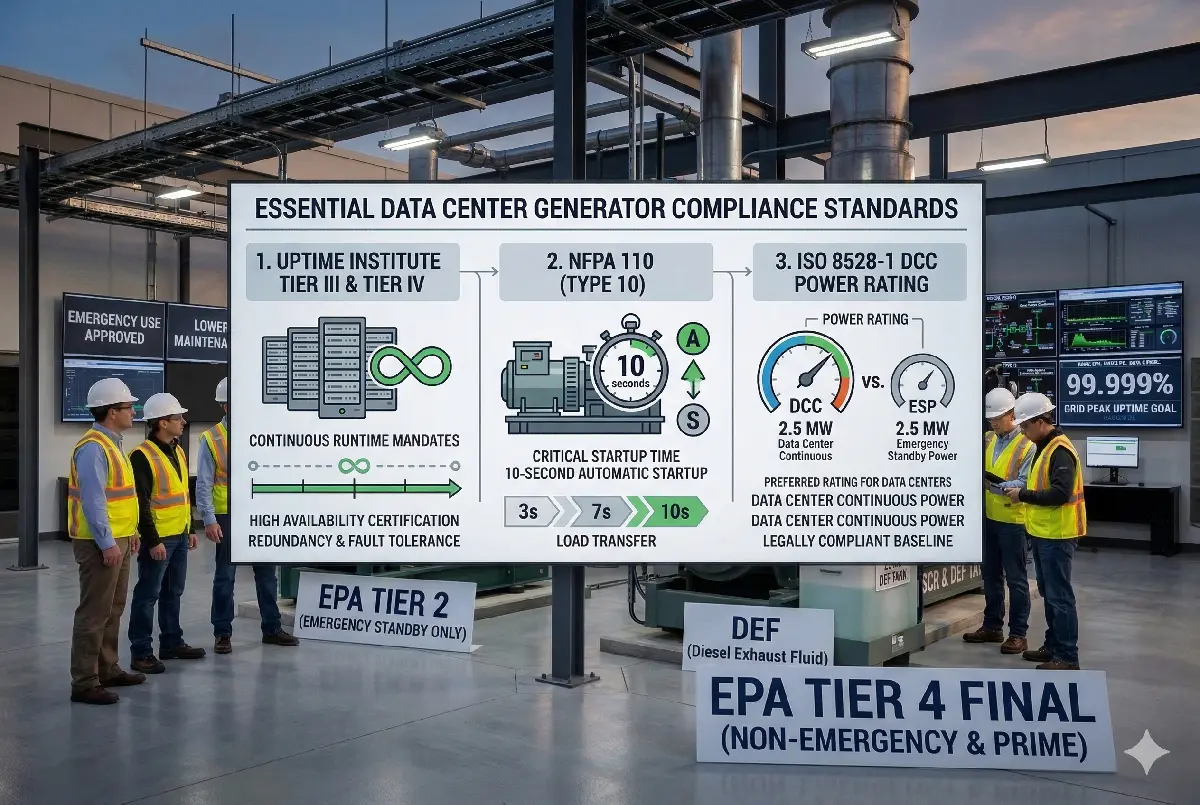
Core Requirements of Uptime Institute Tier Certification
Why Do Uptime Institute Tier Requirements Mandate Continuous Run Times?
Uptime Tier III and IV certifications2 classify the utility grid as an economic alternative, positioning the diesel generator as the primary power source. Consequently, these generators must possess the physical endurance to operate 24/7 under full design loads without any consecutive runtime limitations to guarantee compliance.
This disruptive positioning directly establishes an extremely high compliance threshold. For Tier III (Concurrently Maintainable) and Tier IV (Fault Tolerant) data centers, Uptime strictly mandates that the engine-generator systems used to support the "N" demand must possess the physical capability to operate 365 days a year to counter prolonged utility grid outages.
What is Data Center Continuous (DCP/DCC) Power Rating?
What is the Difference Between DCC and ESP Ratings?
ESP restricts generators to 200 annual hours at a 70% average load, failing high-tier uptime standards. Conversely, DCC (Data Center Continuous) ratings guarantee 100% full-load output for unlimited hours. Specifying DCC prevents dangerous overheating and ensures total compliance with modern mission-critical infrastructure demands.
According to our proprietary 2026 Tier Analysis, traditional ESP (Standby) ratings completely fail to meet Uptime standards due to their strict runtime restrictions.
Table 2: Data Center Generator Power Ratings Comparison (ESP vs. PRP vs. DCC)
| ISO / Industry Rating | Maximum Annual Runtime | Average Load Limit (24h) | Uptime Tier III/IV Compliance | Economics & Application Scenarios |
|---|---|---|---|---|
| ESP (Emergency Standby Power) | ≤ 200 Hours | ≤ 70% | Non-Compliant | Tier I/II, non-critical commercial buildings with strict time limits |
| PRP (Prime Power) | Unlimited | ≤ 70% (or specific calibrated) | Requires significant derating to comply | Remote island operations without utility; direct application causes compliance failure |
| DCP/DCC (Data Center Continuous) | Unlimited | 100% (Unlimited) | Fully Compliant | Tier III/IV hyperscale data centers, offering optimal economics and continuous full-load capacity |
💡 Anders.Chen's Expert Perspective: The Marathon Runner vs. The Sprinter
In my years of consulting, I always explain it to EPCs like this: An ESP (Emergency Standby) rating is a 100-meter sprinter. It gives you explosive, temporary power, but it will physically collapse if you ask it to run for three days straight. A DCC rating is an ultramarathon runner. Trying to cheat capital costs by using ESP-rated generators in a Tier III data center is the fastest way to void your warranties and fail third-party audits. If you want a facility to survive a multi-day regional blackout, you must pay for the marathon runner.
NFPA 110 Standard and the 10-Second Startup Requirement
How Does the NFPA 110 10-Second Rule Impact Engineering?
The NFPA 110 Type 10 standard3 mandates that backup systems detect grid failure, start the engine, and assume the critical facility load within exactly 10 seconds. Failing this physical hurdle risks deep-discharging expensive UPS battery arrays, causing irreversible damage to the power chain.
Type 10 implies a brutal mechanical and electrical physical hurdle. From the moment the utility grid voltage drops, the starter motor must overcome massive mechanical inertia, the fuel injection system must build high pressure, and the generator must instantly establish stable rated voltage and frequency to absorb tens of megawatts of sudden loads.
How to Calculate Data Center Generator Size
How Do You Accurately Calculate Data Center Generator Sizing?
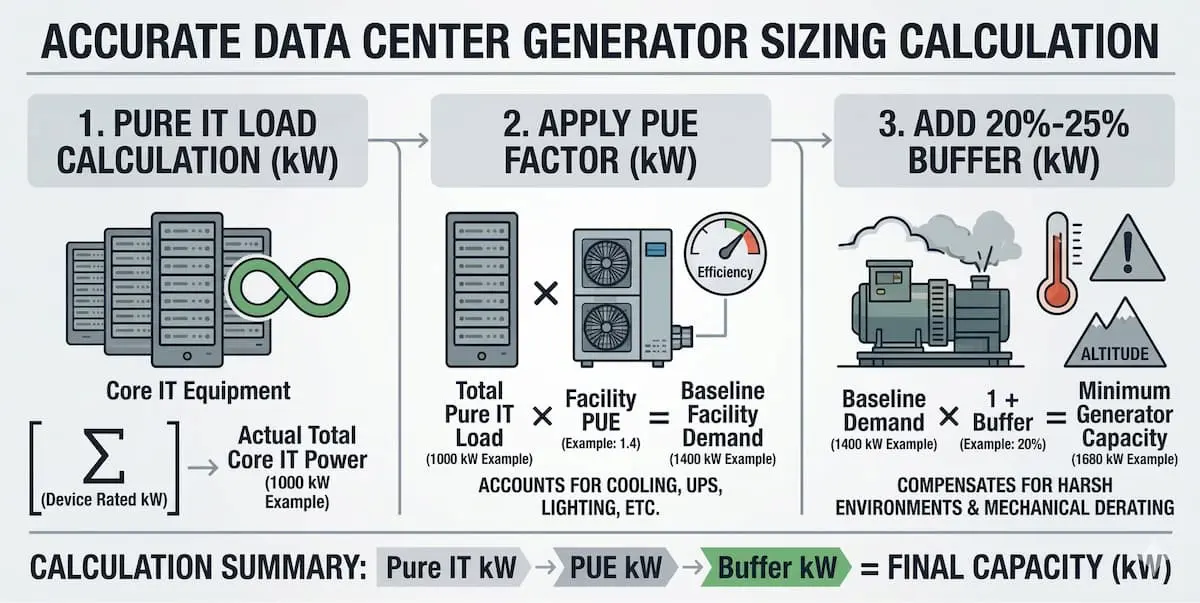
Accurate sizing requires calculating the pure IT load, multiplying it by the facility's Power Usage Effectiveness (PUE)4 factor, and adding a 20-25% derating margin. This mathematical baseline prevents fatal under-sizing during peak loads and avoids the mechanical degradation caused by excessive engine light-loading.
Generator capacity planning is a rigorous systems engineering task. To accurately calculate data center generator sizing, EPC engineers must follow these 3 critical steps:
- Calculate pure IT Load: Inventory and calculate the actual total power consumption (kW) of all core IT equipment.
- Apply PUE Factor: Multiply the pure IT load by the facility's design PUE factor. If IT load is 1000 kW and PUE is 1.4, baseline demand is 1400 kW.
- Add 20%-25% Buffer: Add a buffer margin to compensate for the rigid physical derating of generators in harsh environments (e.g., high altitude or extreme ambient temperatures5).
💡 Field Lesson: The Northern Virginia Commissioning Failure
I recently audited a massive colocation facility in Northern Virginia where the EPC simply added up the server nameplates and slapped a generic 10% margin on top. They completely ignored the parasitic load of the liquid cooling pumps and the summer ambient temperature derating of the engines. When a July heatwave hit simultaneously with a grid voltage sag, the generators couldn't handle the step-load of the cooling compressors kicking back on, leading to a disastrous thermal shutdown. Never ignore the PUE multiplier, and never skimp on the environmental buffer
Application Scenarios: Hyperscale Heavy-Duty vs. Edge Containerized
What Generator Size is Best for Hyperscale vs. Edge Data Centers?
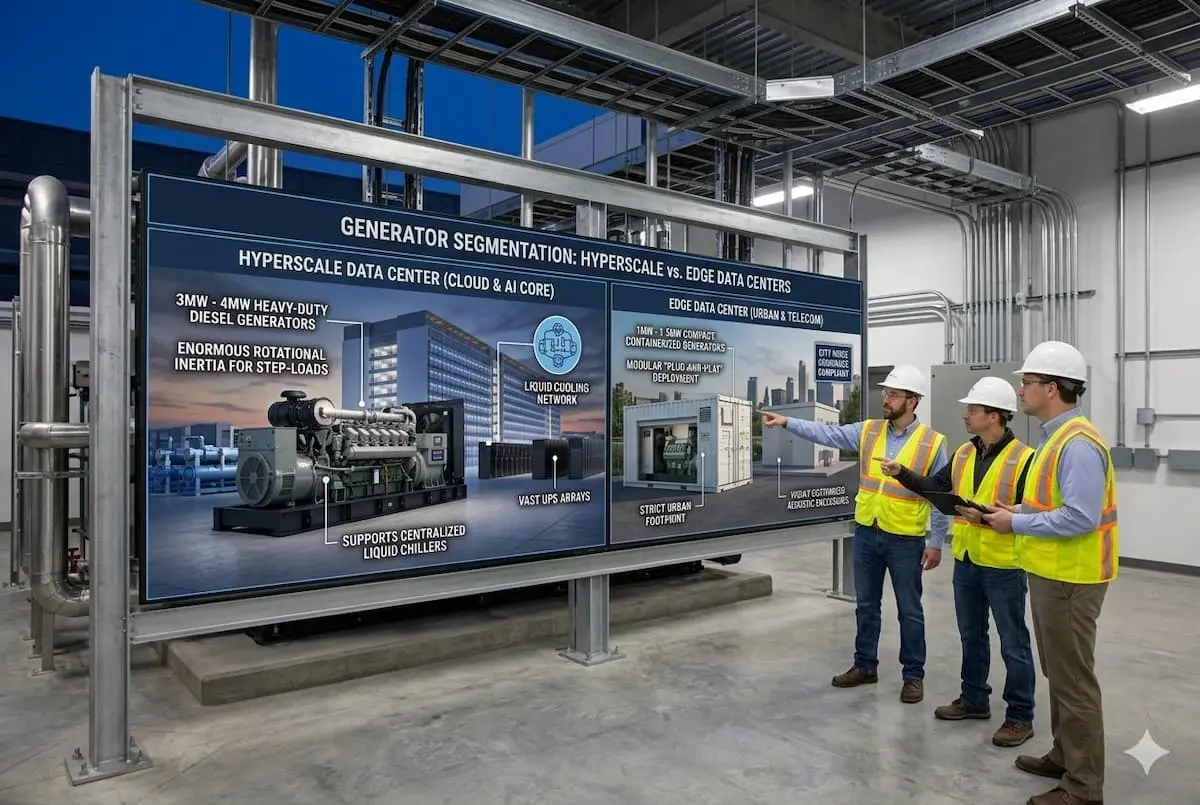
Hyperscale data centers require 3MW to 4MW heavy-duty diesel generators to support massive, centralized AI and cloud clusters. Conversely, Edge data centers rely on 1MW to 1.5MW compact, containerized generators designed for rapid deployment and strict urban footprint constraints.
In the modern digital landscape, there is no "one-size-fits-all" generator solution. EPCs must strictly segment their equipment selection based on the specific facility architecture:
- Hyperscale Data Centers (Cloud & AI Core): These massive facilities are highly dependent on 3MW to 4MW heavy-duty diesel generators. The enormous rotational inertia of these massive engine blocks is mathematically required to absorb the brutal step-loads of centralized liquid-cooling chillers and vast UPS arrays.
- Edge Data Centers (Urban & Telecom): Placed close to end-users to reduce latency, these facilities face severe spatial and acoustic limitations. Here, the industry standard shifts entirely to 1MW to 1.5MW compact, containerized generator sets. These units prioritize extreme power density, modular "plug-and-play" deployment, and highly customized acoustic enclosures to meet strict municipal noise ordinances.
⚡ Phase 2: Data Center Generator Electrical Defense Mechanisms
Key Electrical Technologies and Non-Linear Load Compatibility
How Do UPS Systems Threaten Generator Stability?
Idling UPS systems create severe leading power factors that trigger catastrophic generator self-excitation. To defend against this, EPCs must specify ISO 8528-5 G3 transient performance, mandate 2/3 pitch alternators to neutralize third-order harmonics, and demand PMG excitation for absolute short-circuit fault ride-through.
UPS Compatibility: Defending Against Harmonics
Modern high-efficiency UPS systems usually feature massive capacitor filters wired in parallel. During light-load operation, these large capacitors cause the system to present an extremely low leading power factor (Leading PF) to the generator.
The Solution: EPC and ME suppliers must mandate the use of a 2/3 Pitch Alternator. This specific coil pitch design utilizes spatial phase cancellation to directly short-circuit and eliminate highly destructive third-order harmonics6.
📈 Expert Tip: Monitoring Invisible Degradation
To properly monitor the invisible long-term degradation of winding insulation caused by non-linear harmonics, elite facilities in 2026 are now tracking the Dynamic Sub-Cyclic Impedance Variance (DSCIV). Any unexplained spike in the DSCIV baseline during annual load-bank testing is the primary leading indicator of an impending catastrophic stator failure.
The Bottom Line for Excitation Systems: Why You Must Choose PMG
Why are Shunt excitation systems prohibited in mission-critical facilities?
Shunt systems collapse during severe short circuits because they draw power directly from the dropping main output. Permanent Magnet Generator (PMG) systems provide isolated power, sustaining 300% rated short-circuit current for 10 seconds to allow downstream breakers to trip safely.
Paralleling Logic and Smart Microgrid Integration
Why is Master-Master Paralleling Essential for Data Centers?
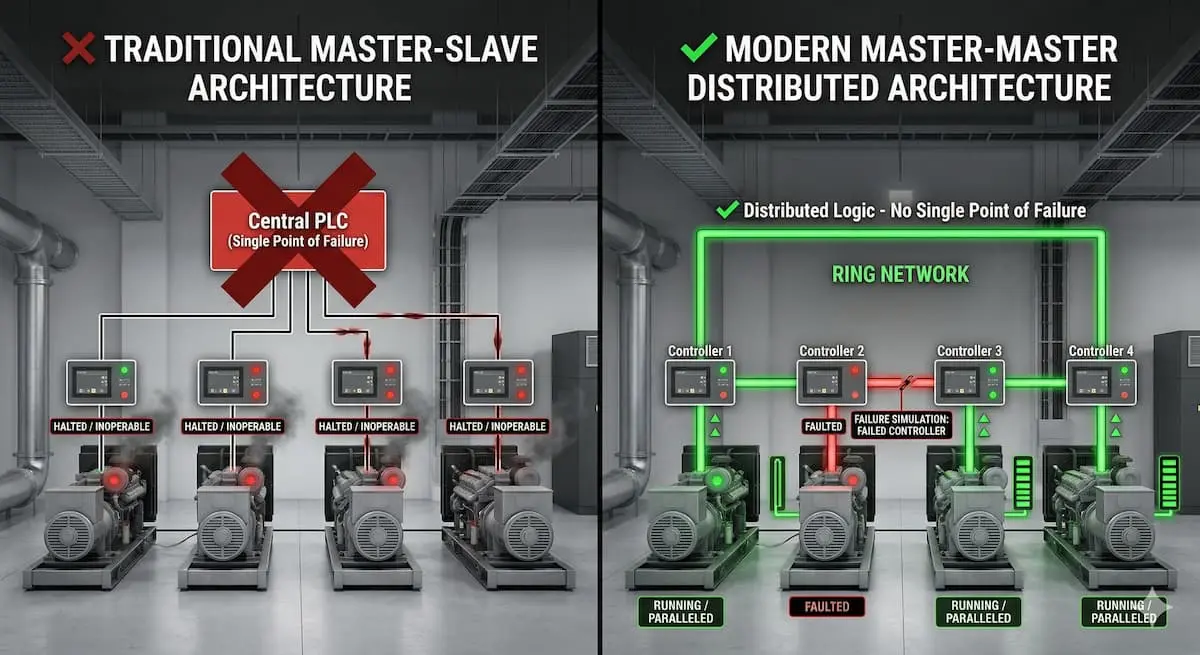
Centralized master-slave configurations create catastrophic single points of failure. Master-Master distributed logic embeds synchronization algorithms inside every individual controller. Combined with Closed Transition ATS, this architecture guarantees zero-blackout testing and provides extreme fault tolerance for the backup grid.
ATS Transition Logic: The Value of Closed Transition
To pursue ultimate reliability, high-standard data centers typically prefer Closed Transition (Make-Before-Break) logic. Once fully synchronized, the ATS momentarily parallels the generator with the utility before smoothly opening the utility side, achieving a completely "zero-blackout" load transfer. This eliminates the voltage spikes and current shocks inflicted on expensive downstream UPS battery arrays during load testing.
Paralleling Architecture: Master-Master Distributed Logic
Traditional paralleling systems heavily rely on a central PLC or master controller, which constitutes a massive "Single Point of Failure." In modern data centers pursuing "five nines" uptime, such risk-laden designs must be strictly discarded in favor of masterless/multi-master distributed logic. Even if one generator controller in the parallel network is damaged, it will absolutely not affect the automatic formation and grid-tied power delivery of the remaining healthy units.
⚙️ Phase 3: Data Center Generator Mechanical & Cooling Architecture
Mechanical Architecture Selection: Engine and Cooling Systems
Which Engine Architecture Guarantees Data Center Reliability?
Selecting the correct mechanical architecture requires balancing High-Pressure Common Rail (HPCR) efficiency against Electronic Unit Injector (EUI) ruggedness. Furthermore, engineers must rigorously calculate aerodynamic room resistance; if static pressure exceeds 120 Pa, remote radiators become mathematically mandatory.
Fuel Injection Technology: HPCR vs. EUI
Which Fuel Injection System is Best for Data Centers?
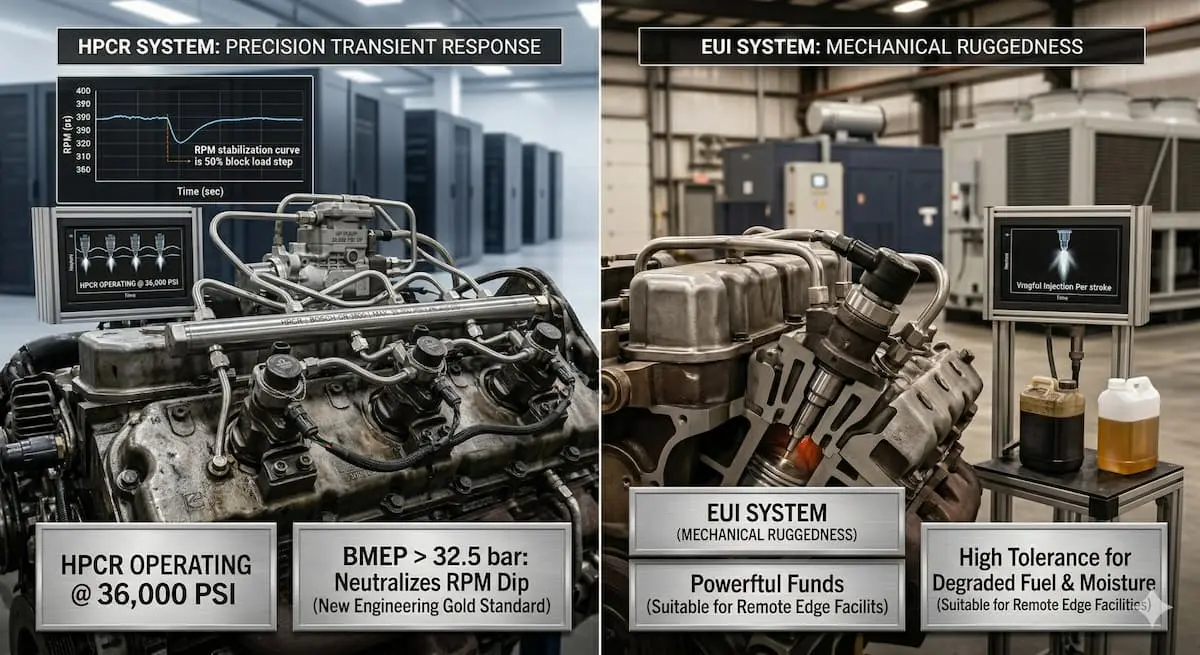
HPCR delivers unmatched transient response by decoupling injection pressure from engine speed, allowing multiple micro-injections per stroke. Conversely, EUI systems offer extreme mechanical ruggedness and high tolerance for degraded fuel, making them highly suitable for remote edge facilities lacking advanced fuel polishing systems.
In modern high-power diesel engines, High-Pressure Common Rail (HPCR) offers extremely fast response, ultra-low emissions, and excellent fuel economy. Electronic Unit Injectors (EUI) have a much higher tolerance for poor-quality fuel and moisture.
⚙️ Tech Deep Dive: Anchoring Proprietary Performance Data
In 2026, the true benchmark for mission-critical transient response is no longer just engine displacement—it is cylinder pressure dynamics. Modern top-tier engine blocks have fundamentally rewritten the rules. I frequently point out that when an engine sustains a Brake Mean Effective Pressure (BMEP) > 32.5 bar paired with an HPCR operating at 36,000 PSI, it can effectively neutralize the RPM dip caused by a brutal 50% block load step. This BMEP threshold is the new engineering gold standard you should be hunting for in vendor spec sheets.
The Reality of "Green" Backup Power
Many data center owners are discussing replacing diesel engines with Battery Energy Storage Systems (BESS) or natural gas. As a power systems veteran, my view is that we need to objectively burst this hype bubble: batteries are simply not suited for multi-day data center backup. BESS charged by solar requires massive physical footprints. Natural gas generators, on the other hand, start too slowly and struggle to meet the NFPA 10-second rule.
In my opinion, for the next 10 years, the most pragmatic green solution is directly fueling existing mission-critical diesel platforms with HVO (Hydrotreated Vegetable Oil). This drop-in fuel instantly reduces carbon emissions by up to 90% without sacrificing load-acceptance capabilities.
EPA Emissions Compliance: Tier 2 vs. Tier 4 Final
When must a data center use an EPA Tier 4 Final7 generator instead of Tier 2?
In North America, EPA Tier 2 generators are strictly limited to emergency standby operations. However, if a data center participates in grid peak-shaving, demand-response programs, or operates in highly regulated non-attainment zones, federal law mandates EPA Tier 4 Final generators equipped with SCR (Selective Catalytic Reduction) systems.
Navigating environmental permitting is a major hurdle for hyperscale deployments in North America and Europe. While electrical and mechanical compliance ensures facility uptime, ignoring emissions regulations can halt construction completely:
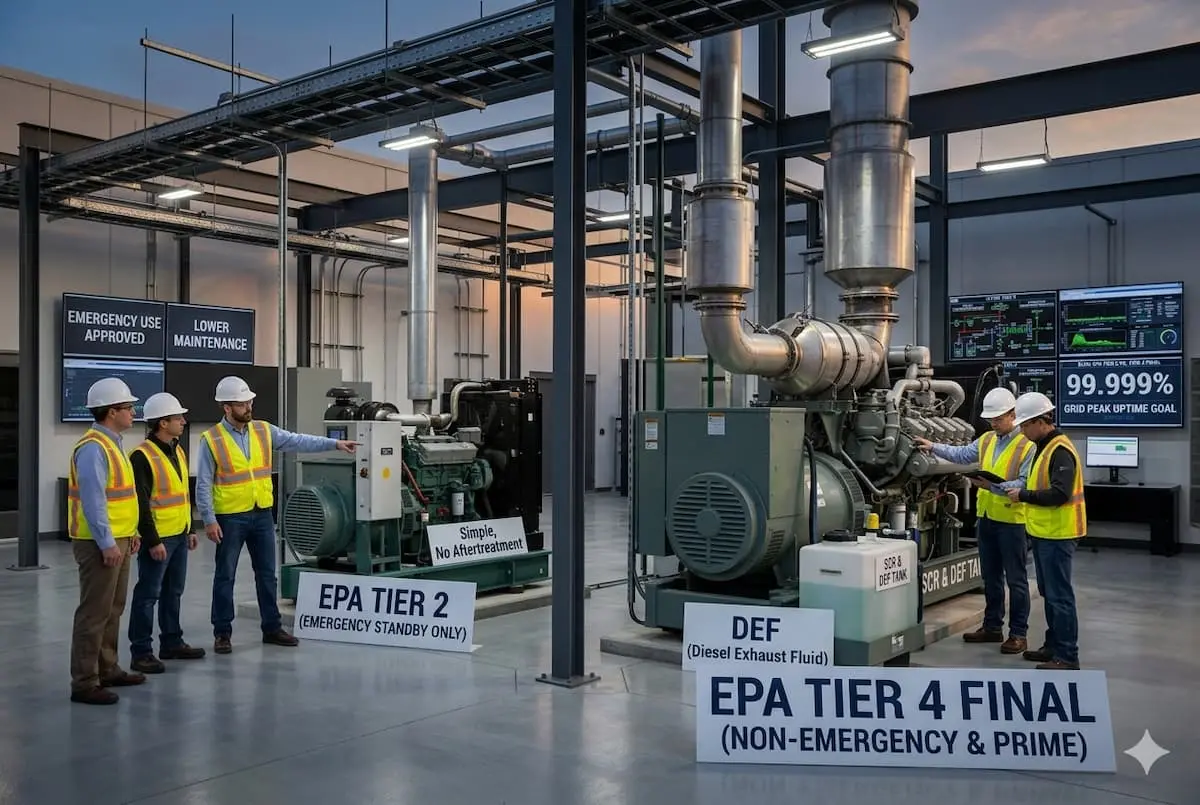
- EPA Tier 2 (Emergency Standby): For the vast majority of traditional data centers, Tier 2 engines are legally sufficient provided they are only run during actual utility outages and mandatory maintenance testing. They are mechanically simpler and lack complex exhaust aftertreatment.
- EPA Tier 4 Final (Non-Emergency & Prime): If an EPC plans to use the backup generators to generate revenue through grid peak-shaving, or if the facility is located in strict environmental jurisdictions, Tier 4 Final is mandatory. These units require massive SCR aftertreatment systems and continuous DEF (Diesel Exhaust Fluid) dosing.
⚠️ Regulatory Warning for 2026
Never assume Tier 2 is universally acceptable for standby. In 2026, many local municipal air quality boards (such as California's SCAQMD) are denying air permits for massive 100MW+ hyperscale campuses unless they voluntarily adopt Tier 4 Final emissions standards, regardless of their emergency-only designation. Always clear your air permits before finalizing the generator PO.
🏆 Phase 4: Data Center Generator Brands, Project Delivery & O&M
Top Generator Brands Comparison
How Do the Top Diesel Generator Brands Compare?
Because mission-critical markets have zero tolerance for failure, top-tier brands have evolved distinct engineering philosophies over years of market competition. Your selection must align strictly with specific site constraints.
| Brand | Engineering Philosophy | Key Strength | Best Use Case |
|---|---|---|---|
| 🟡 Caterpillar (CAT) | Massive displacement, heavy iron | Unparalleled long-term durability | Hyperscale data centers |
| 🔴 Cummins | Precision combustion, electronic control | Microgrid paralleling, HPCR systems | Smart data centers requiring precise integration |
| 🔵 MTU (Rolls-Royce) | Lightweighting, high power density | Extreme space efficiency | Colocation, urban edge data centers |
Current Supply Chain Challenges and EPCM Procurement Strategy
How Can EPC Contractors Overcome Generator Supply Chain Delays?
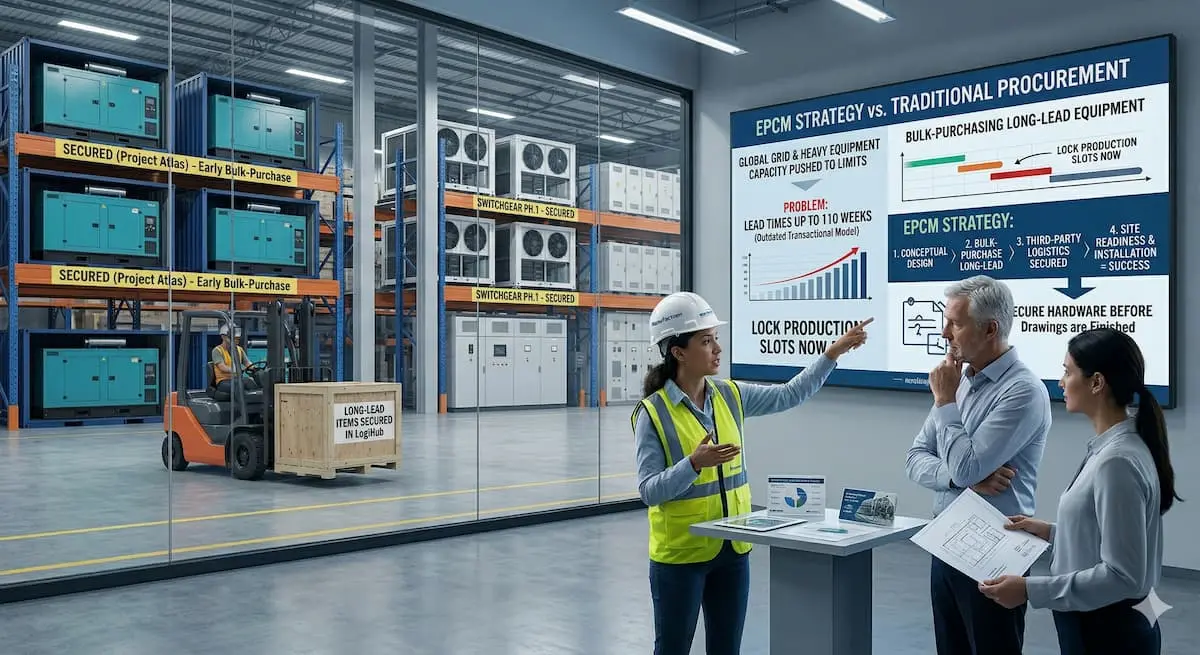
With generator lead times stretching up to 110 weeks, traditional procurement models are obsolete. EPCs must transition to EPCM strategies, bulk-purchasing long-lead equipment during the conceptual design phase and utilizing third-party logistics centers to secure hardware long before final site readiness.
As AI and compute demands surge exponentially, global grid and heavy equipment manufacturing capacities are being pushed to their limits. Today, critical mission components including heavy-duty generators, massive cooling systems, and medium-voltage switchgear face universally extended delivery cycles.
From my personal standpoint as a manufacturer insider, our biggest headache is an EPC contractor showing up with finalized, ready-to-build drawings demanding immediate equipment delivery. In an era where lead times stretch from 72 to 110 weeks, this traditional transactional relationship simply no longer works. I strongly urge EPCs to treat manufacturers as "Engineering Partners" and lock in production slots before the drawings are even finished.
TCO Financial Model and FAT (Factory Acceptance Test)
How to Maintain a Data Center Generator? (OpEx & Load Testing)
What is the True Total Cost of Ownership for Generators?
A data center generator’s true TCO far exceeds its initial capital expenditure. Over a 20-year lifecycle, hidden operational expenses—including continuous fuel polishing, redundant battery replacements, annual full-load testing, and BMS telemetry subscriptions—often surpass the bare machine’s original purchase price.
Factory Acceptance Test (FAT) Core Checklist
How do you conduct a Factory Acceptance Test (FAT) for a data center generator?
To successfully conduct a Factory Acceptance Test (FAT) for a data center generator, EPC and ME suppliers must utilize the following core checklist to exhaustively verify system fault tolerance:
- Mechanical Structure and Insulation Verification: Verify physical dimensions, baseplate leveling, fuel system pressure (30 minutes no leak), and high-potential (Hi-Pot) insulation resistance.
- Full-Stack Load Step and Thermal Stability: Connect massive test load banks and execute repeated step load applications to verify compliance with ISO 8528-5 G3 transient limits.
- Emergency Fault Injection and Control Logic Validation: Deliberately inject extreme physical faults (e.g., Low Oil Pressure, engine overspeed) to verify that the smart controller accurately identifies fatal faults and decisively cuts the fuel supply within milliseconds.
Post-Installation O&M: NFPA 110 and Load Bank Testing
What is diesel generator wet stacking and how does load bank testing prevent it?
Wet stacking occurs when a diesel engine operates at light loads, causing unburned fuel and carbon to accumulate in the exhaust. Routine load bank testing prevents this by artificially applying a heavy electrical load, raising engine temperatures to safely burn off harmful soot deposits.
The procurement and commissioning of a generator only mark the beginning of its lifecycle. For data centers, post-installation Operations & Maintenance (O&M) is rigorously governed by standards like NFPA 110 (Level 1 EPSS), which mandates strict testing protocols to guarantee startup reliability.
The Threat of Wet Stacking in Data Centers: Data centers often operate at a fraction of their design capacity during their first few years. If a 3MW generator is fired up during an outage or test to support a facility that is only drawing 500kW of actual IT load, the diesel engine will run far below its optimal operating temperature. This leads to "wet stacking"—a severe condition where unburned fuel and soot bake onto the pistons, turbochargers, and exhaust valves. Over time, this degradation drastically reduces engine performance and risks catastrophic failure during a real emergency.
NFPA 110 Testing Compliance Requirements: To combat this mechanical decay, NFPA 110 requires generators to be exercised monthly. Crucially, the generator must be loaded to at least 30% of its nameplate kW rating (or reach the manufacturer's minimum exhaust gas temperature) for a minimum of 30 minutes. If your facility's live load cannot meet this 30% threshold (which is extremely common in newly commissioned data centers), you are required to perform a rigorous Annual Load Bank Test using a resistive load bank.
The mandatory profile includes:
- 50% of the nameplate kW rating for 30 continuous minutes.
- 75% of the nameplate kW rating for 1 continuous hour.
💡 O&M Expert Tip: Permanent Load Banks
Do not treat load bank testing as a mere compliance checkbox. In my engineering experience, integrating permanent resistive load banks into your data center's initial electrical design is a massive OPEX saver. It eliminates the recurring logistical nightmare and costs of renting portable load banks and running temporary cables every year, paying for itself within the first few maintenance cycles.
Conclusion: The Future of Data Center Generators
In the context of the modern compute explosion, the application of data center diesel generator sets has completely transcended the narrow definition of "backup power." It constitutes the core of an incredibly complex and highly agile "mission-critical microgrid".
Faced with extreme engineering complexity and the current supply chain exhaustion involving lead times of 72 to 110 weeks, traditional waterfall procurement models have failed entirely. EPC teams must establish deep strategic partnerships and technical synergy with top-tier equipment manufacturers at the earliest lifecycle stage. Only through early intervention, customizing rigorous TCO financial models, and locking down long-lead core equipment at the front end, can EPCs truly fortify this final line of defense ensuring "five nines" uptime.
Data Center Generator FAQ (Frequently Asked Questions)
Q1: Why is the Data Center Continuous (DCC) generator rating required instead of Emergency Standby Power (ESP)?
A: ESP ratings fail Uptime Tier III and IV standards because they restrict annual runtime to 200 hours and cap average load at 70%. Conversely, the DCC rating is required because it guarantees 100% continuous full-load power without any runtime limits during prolonged utility outages.
Q2: How do capacitive loads from UPS systems affect data center generators?
A: Lightly loaded UPS systems present a leading power factor that can cause generator self-excitation and overvoltage tripping. To combat this and the injection of non-linear harmonics, data centers must specify a 2/3 pitch alternator to eliminate destructive third-order harmonics and prevent neutral wire overheating.
Q3: Why are Shunt excitation systems prohibited in data center generators?
A: Shunt systems rely on the generator's main output. During a severe short circuit, this power drops, causing the magnetic field to collapse. High-standard data centers mandate Permanent Magnet Generator (PMG) systems, which provide isolated power to sustain 300% short-circuit current for up to 10 seconds.
Q4: What is the advantage of Master-Master distributed logic for data center generator paralleling?
A: Master-Slave systems rely on a central controller, creating a massive single point of failure. Conversely, Master-Master distributed logic embeds critical synchronization algorithms into every independent controller. If one fails, the remaining healthy units seamlessly continue parallel grid operations, providing extreme fault tolerance.
Q5: What is the NFPA 110 Type 10 requirement for data center generators?
A: The NFPA 110 Type 10 standard requires the backup generator system to detect a utility outage, start the engine, reach rated voltage and frequency, and accept the facility's critical load within exactly 10 seconds. This prevents the deep discharging of expensive UPS battery arrays.
References & Essential Engineering Standards
To ensure transparency and engineering rigor, the methodologies and compliance benchmarks discussed in this guide are anchored to the following internationally recognized industry standards:
Legal Protection & Terms of Use
Copyright Notice: © 2026. Unauthorized use, reproduction, or mirror copying of this material without express and written permission from the author and/or site owner is strictly prohibited.
Terms of Use & DMCA Warning: The proprietary methodologies, engineering analyses, and specific metric combinations (including the Dynamic Sub-Cyclic Impedance Variance (DSCIV) tracking framework and 32.5 bar BMEP performance benchmarking) contained within this document constitute protected intellectual property. Unauthorized commercial scraping or automated content extraction of this technical guide is strictly forbidden. We actively monitor the web for plagiarism and reserve the right to file immediate takedown notices under the Digital Millennium Copyright Act (DMCA) and pursue further legal action against offending domains and hosting providers.
👨💻 About the Author: Anders.Chen
Anders holds dual Bachelor's degrees in Electrical Engineering & Automation and International Trade. Since 2005, he has dedicated his career to the global export and deployment of heavy-duty diesel generator sets. With over two decades of cross-border technical and commercial expertise, he specializes in delivering robust, customized backup power solutions across a diverse range of mission-critical applications and international EPC projects.
ISO 8528-1 (Reciprocating Internal Combustion Engine Driven Alternating Current Generating Sets): Cited to establish the strict baseline difference between Emergency Standby Power (ESP) and Data Center Continuous (DCC) power ratings. ↩
Uptime Institute Tier Standards: Referenced as the ultimate global authority on data center topology, dictating the mandatory continuous runtime physical capabilities for Tier III and Tier IV engine-generator systems. ↩
NFPA 110 (Standard for Emergency and Standby Power Systems): The critical life-safety code cited for the rigid "Type 10" physical hurdle, legally requiring generators to accept the critical facility load within exactly 10 seconds. ↩
The Green Grid: Acknowledged as the original architects of the Power Usage Effectiveness (PUE) metric, which must be mathematically factored into any baseline capacity planning to avoid generator undersizing. ↩
ASHRAE TC 9.9 (Thermal Guidelines for Data Processing Environments): Cited to emphasize the absolute necessity of calculating environmental derating margins (due to extreme ambient temperatures and altitude) to prevent catastrophic thermal shutdowns. ↩
IEEE 519 (Recommended Practice and Requirements for Harmonic Control in Electric Power Systems): Referenced to underscore the electrical engineering imperative of mitigating destructive third-order harmonics generated by capacitive UPS systems through proper alternator pitch selection. ↩
U.S. EPA (Environmental Protection Agency) Emission Standards: Referenced to highlight the legal distinction and physical equipment differences (e.g., SCR deployment) required when transitioning from Tier 2 emergency operations to Tier 4 Final non-emergency/prime operation. ↩