
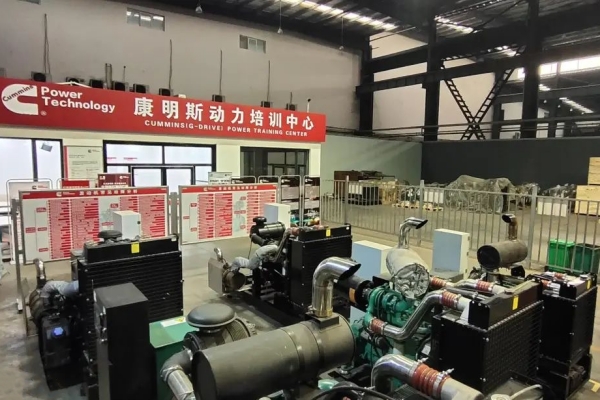
Cummins diesel engines are manufactured mainly in the United States (Indiana and New York), China (the CCEC, DCEC and Xi’an plants), India, Japan and the UK. Which plant built your engine depends on the model and the market it was sold in. For many diesel generator users, Cummins engines1 are a trusted choice.
Cummins engines are manufactured in multiple locations worldwide, primarily in the United States, China, India, Japan, and the UK. While headquartered in the US, Cummins operates a vast network of over 50 manufacturing plants globally to serve regional markets with consistent, high-quality power solutions across all industrial applications.
With a rich history of global production, understanding where Cummins engines come from can help you make more informed purchasing decisions. Let’s take a closer look at the production sites, the American roots of the company, and the people behind these powerful engines.
Where Are Cummins Engines Made? (by country)
Cummins builds diesel engines across several countries. The main manufacturing locations are:
| Country | Key plants / joint ventures |
|---|---|
| United States | Jamestown, New York; Columbus, Indiana (design HQ); Rocky Mount, North Carolina |
| China | CCEC (Chongqing); DCEC (Xiangyang); XCEC (Xi’an); CPG generator-set assembly (Wuhan) |
| India | Cummins India — Pune and Phaltan |
| Japan | Komatsu Cummins joint venture — Oyama |
| United Kingdom | Cummins UK — Daventry |
Which Cummins series is made where?
| Engine series | Where it is made | Power range |
|---|---|---|
| B / C / L / Z | Xiangyang, China — DCEC (Dongfeng Cummins) | 16–400 kW |
| N855 / K19 / K38 / K50 | Chongqing, China — CCEC (Chongqing Cummins) | 200–1,340 kW |
| QSM11 | Xi’an, China — XCEC (Xi’an Cummins) | 245–343 kWm |
| North American series | United States — Jamestown NY / Columbus IN / Rocky Mount NC | By market |
| Regional series | India (Pune/Phaltan) · Japan (Komatsu Cummins) · UK (Daventry) | By market |
Cummins’ Daventry plant in the UK recently marked its 10,000th generator set. “This investment reflects the dedication of our Daventry workforce, who continue to deliver world-class power solutions to customers around the world,” said Roy Free, plant manager at Cummins Daventry.2
Related: See our top 10 diesel generator manufacturers guide, or explore our Cummins-powered diesel generators.
Are Cummins engines made in China?
Yes, Cummins engines are manufactured in China through major joint ventures such as Dongfeng Cummins (DCEC) and Chongqing Cummins (CCEC). These facilities produce a wide range of engines for power generation and industrial use, strictly adhering to Cummins’ unified global quality standards to ensure consistent reliability worldwide.

Cummins has maintained a strategic presence in China for decades. This local manufacturing capability allows them to efficiently serve the growing demand across Asia’s infrastructure and industrial sectors. Specifically, the company operates high-tech plants in Xiangyang (DCEC), Chongqing (CCEC) and Xi’an (XCEC)3, covering both complete engine assembly and critical component manufacturing. By producing locally, Cummins can offer more competitive pricing and faster delivery while ensuring all products meet China’s stringent emissions requirements without sacrificing performance.
Key Manufacturing Facilities in China
| Location | Type of Production | Purpose |
|---|---|---|
| Wuhan | Generator Set Assembly | Production of diesel generator sets (Cummins Power Generation / CPG) |
| Xiangyang | Engine Components | Focus on components for both local and global markets |
| Chongqing | Engine Assembly | CCEC — high-horsepower N855/K19/K38/K50 engines for power generation |
| Xi’an | Engine Assembly | XCEC — QSM11 engines (245–343 kWm) |
Is Cummins engine American?
Yes, Cummins is an American company headquartered in Columbus, Indiana. Founded in 1919 by Clessie Cummins and William G. Irwin, it is a global leader in power technology. While manufacturing is global, its core engineering, research, and corporate leadership remain deeply rooted in its historic United States base.

Cummins has been an iconic name in American manufacturing for over a century. Their commitment to research and development in the U.S. has led to many breakthrough technologies in engine performance, fuel efficiency, and emissions control. The company’s deep American roots are evident in their ongoing investment in U.S. manufacturing and in their support for local communities through job creation and economic development. This blend of global manufacturing and American innovation has helped Cummins maintain a competitive edge in the market.
Who builds Cummins diesel engines?
Cummins diesel engines are built by Cummins Inc. across more than 50 global manufacturing facilities. The company manages the entire lifecycle, from design and engineering in Indiana to precision assembly and rigorous testing in regional plants, ensuring every unit meets the same high-performance specifications regardless of the production site.

The process of building a Cummins diesel engine is complex and involves multiple stages of design, manufacturing, and testing. From initial design concepts at their headquarters in Indiana to final assembly in one of their many global plants, every step is carefully managed to meet Cummins’ high standards of performance and reliability. Cummins’ engineers work closely with manufacturing teams to ensure that every engine meets the required specifications before leaving the factory.
Cummins Diesel Engine Production Process
| Stage | Location/Facility | Description |
|---|---|---|
| Design | Columbus, Indiana | Research and development of engine models |
| Assembly | Global Facilities | Engines assembled in regional plants |
| Testing | Global Facilities | Engines undergo rigorous performance testing |
This meticulous approach to engine building is part of what makes Cummins engines4 known for their long-lasting durability and reliability.
Who owns most of Cummins?
Cummins Inc. is a publicly traded company (NYSE: CMI) primarily owned by institutional investors. Major shareholders include global investment firms like The Vanguard Group and BlackRock5. This diverse ownership structure, which includes pension funds and individual stockholders, supports the company’s long-term stability and independent growth in the power industry.

Being a publicly traded company, Cummins is owned by a broad base of shareholders. These investors typically hold a significant portion of the company’s shares, as they are attracted to Cummins’ stable growth, strong financial performance, and leading position in the diesel engine market. Individual shareholders, including employees and members of the Miller family (founders of Cummins), also own significant stakes in the company.
Institutional Investors in Cummins
| Major Shareholder (5%+ holders) | Shares Held (as of March 16, 2026) | % of Class |
|---|---|---|
| The Vanguard Group | 17,754,995 | 12.9% |
| BlackRock, Inc. | 11,524,411 | 8.4% |
What is special about a Cummins engine?
Cummins engines are distinguished by their exceptional durability, fuel efficiency, and versatile application across various industries. By integrating advanced turbocharging and electronic control systems, they deliver high power output with low emissions, making them a preferred choice for heavy-duty mining, marine, and emergency power generation worldwide.

What makes a Cummins engine special goes beyond just its specifications. Whether powering emergency generators6, mining equipment, or large industrial machinery, Cummins engines are designed to handle the toughest jobs. One of the key features of Cummins engines is their fuel efficiency. Additionally, Cummins is a leader in developing engines that comply with stringent emission standards7, making them environmentally friendly without compromising performance.
Key Features of Cummins Engines
| Feature | Benefit |
|---|---|
| Fuel Efficiency | Lower fuel consumption, more power |
| Reliability | Long-lasting performance under heavy use |
| Emission Compliance | Meets global emissions standards |
Conclusion
Cummins engines are manufactured worldwide, with a strong American heritage and facilities in China. Their global reach ensures quality and reliability.
👨💻 About the Author: Anders.Chen
Anders holds dual Bachelor’s degrees in Electrical Engineering & Automation and International Trade. Since 2005, he has dedicated his career to the global export and deployment of heavy-duty diesel generator sets. With over two decades of cross-border technical and commercial expertise, he specializes in delivering robust, customized backup power solutions across a diverse range of mission-critical applications and international EPC projects.
Frequently Asked Questions (FAQ)
1. Is there a quality difference between US-made and China-made Cummins engines?
No. Cummins applies the same global engineering and quality standards to every plant. Whether an engine is produced in Columbus, Indiana, or by CCEC in Chongqing, it must meet the same engineering specifications, material standards, and rigorous testing protocols. This ensures consistent "Peak Performance" and durability worldwide.
2. How can I tell where my Cummins engine was manufactured?
The easiest way is to check the Engine Dataplate attached to the engine block. It lists the manufacturing plant location and the Engine Serial Number (ESN). You can also use the Cummins QuickServe online system with your ESN to get detailed information about its production origin and specific build list.
3. What is the difference between DCEC and CCEC?
DCEC (Dongfeng Cummins) primarily focuses on mid-range engines (B, C, L, and ISL series) ranging from 80 to 680 HP, commonly used in construction and medium power generation. CCEC (Chongqing Cummins) specializes in high-horsepower engines (M11, K19, K38, and K50 series) designed for heavy-duty industrial, marine, and large-scale power applications.
4. Are Cummins engines only used for power generation?
While Cummins is a leader in diesel generator sets, their engines are incredibly versatile. They are the backbone of various industries, providing reliable power for heavy-duty mining equipment, marine vessels, agricultural machinery, and commercial trucking. This wide-ranging application is a testament to their robust engineering.
5. Does the global manufacturing of Cummins affect parts availability?
Actually, it improves it. Because Cummins uses standardized parts across its global facilities (DCEC, CCEC, etc.), users benefit from a vast global supply chain. This means that whether you are in Asia, Europe, or the Americas, finding genuine replacement parts and authorized service support is faster and more reliable.
6. Does the manufacturing location affect the price?
While manufacturing in China (DCEC/CCEC) offers more competitive logistics costs for the Asian market, the core pricing reflects Cummins’ global technology and unified quality standards.
Footnotes
-
Learn more about Cummins’ global production. ↩
-
See Cummins’ news release on the 10,000th generator set from its Daventry plant in the UK. ↩
-
Cummins’ official China site lists its mainland joint ventures — Dongfeng Cummins (DCEC), Chongqing Cummins (CCEC) and Xi’an Cummins (XCEC). ↩
-
Learn about black start solutions. ↩
-
Cummins’ 2026 proxy statement (SEC Form DEF 14A) lists its principal shareholders, including The Vanguard Group and BlackRock. ↩
-
NFPA 110 is the standard for emergency and standby power systems. ↩
-
Find out about Cummins’ emission compliance. ↩