

You don’t need to turn a generator off overnight — it can run all night — as long as it’s outdoors at least 20 feet from the house, well-ventilated, and has enough fuel. If it runs out of fuel during the night it simply shuts down, so refuel only after it’s off and cooled. Below are the safety rules and the risks.
Leaving a generator running overnight is safe when you control three things: ventilation (carbon monoxide), fuel level, and the generator’s condition. Here is what to check before letting it run through the night.
Is It Safe to Leave a Generator Running Overnight?
Yes — leaving a generator running overnight is safe if certain precautions are followed: fuel supply, ventilation and the generator’s condition.

Key Safety Considerations
- Proper ventilation. Generators emit carbon monoxide (CO), which is deadly in high concentrations. Keep the generator outdoors in a well-ventilated area — never in a garage or basement. See generator safety guidance1.
- Fuel levels. Make sure there is enough fuel to last the night. Running out shuts the generator down abruptly and leaves you without power.
- Monitoring. Even with automatic low-oil/overheat shutoffs, check the generator periodically on long runs.
- Location. Never run it in a garage, basement or any enclosed space; exhaust must dissipate freely.
- Check for malfunctions. Make sure the generator is in good condition and serviced before long runs — a faulty unit is more dangerous unattended.
Safe Practices for Running a Generator Overnight
- Place it outdoors in an open area, at least 20 feet from windows, doors and vents.
- Set it on stable, level ground to avoid spills.
- Monitor fuel levels regularly so it doesn’t run dry.
- Use a carbon monoxide detector nearby.
How Long Can You Run a Generator Continuously?
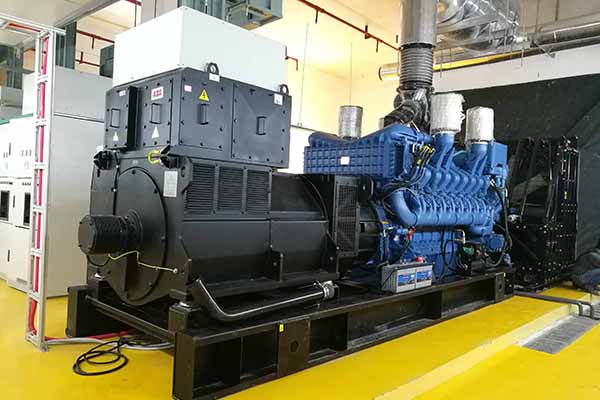
Runtime depends on the model, fuel capacity and load. Most diesel generators run 8–24 hours on a tank, depending on conditions and type. See how long a diesel generator can run continuously.

Factors Affecting Continuous Runtime
- Fuel tank capacity. A larger tank means longer run time before refueling.
- Load. More equipment means more fuel and less runtime; heavy load also risks overheating.
- Generator type. Commercial diesel sets are built for continuous operation; portable units suit shorter runs.
- Maintenance and condition. Well-maintained generators run longer and more efficiently.
| Generator Type | Fuel Tank Capacity | Expected Continuous Runtime (at full load) |
|---|---|---|
| Small Portable Diesel | 5-10 gallons | 8-12 hours |
| Medium Commercial Diesel | 20-30 gallons | 10-16 hours |
| Large Industrial Diesel | 100+ gallons | 20-24 hours |
What Are the Risks of Running a Generator Overnight?
Extended overnight use carries risks — from safety hazards to performance issues — but most can be managed.
Potential Risks
- Carbon monoxide poisoning. The biggest risk: an enclosed or poorly ventilated generator can quickly build up deadly CO levels. See the CPSC CO safety guide2.
- Overheating. Long runs under heavy load can overheat the engine and cause failure or fire.
- Fuel shortage. Running out of fuel overnight shuts the unit down unexpectedly.
- Excessive wear. Continuous operation wears parts faster without maintenance (low oil, dirty filters, clogged fuel lines).
- Noise pollution. A diesel set running all night can disturb neighbors.
- Electrical overload. Too many devices or a load above rating can trip or damage the generator.
Mitigating Risks
- Run the generator outdoors, at least 20 feet from open windows or doors.
- Keep it well-ventilated to prevent CO buildup.
- Check oil and do routine maintenance to prevent overheating, following standby maintenance requirements3.
- Use an automatic transfer switch (ATS) to prevent overload and safe operation.
- Use a generator with automatic low-oil/overheat shutdown.
Frequently Asked Questions
Can you leave a generator running overnight?
Yes, if it’s outdoors 20 feet from the house, well-ventilated, and has enough fuel. Never run it indoors or in a garage.
Do generators need to be turned off overnight?
No. A generator can run all night — just follow the safety rules and stop it only to refuel (after it cools down).
What happens if a generator runs out of gas during the night?
It shuts down and you lose power. Refuel only after the generator is off and cooled, then restart it.
Is it safe to run a generator overnight?
Yes, outdoors and at least 20 feet from windows or doors, with a carbon monoxide detector nearby.
How long can a generator run continuously?
Most diesel generators run 8–24 hours on a full tank, depending on tank size and load.
How far should a generator be from the house?
At least 20 feet from windows, doors and vents so exhaust (carbon monoxide) can’t drift inside.
Conclusion
You can leave a generator running overnight, but only with proper ventilation, adequate fuel and a well-maintained unit. Keeping it outdoors 20 feet away, monitoring fuel, and watching for overheating makes overnight operation safe and reliable.