
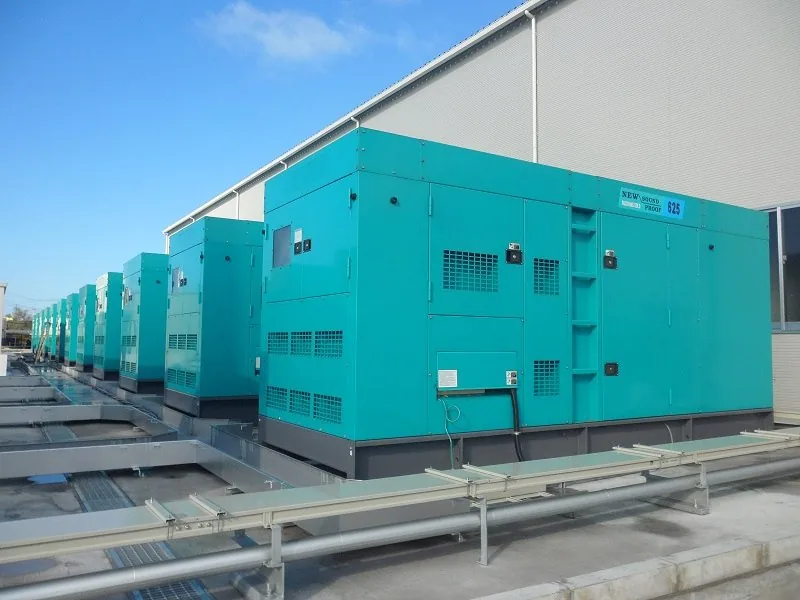
Diesel Standby Generators
Backup diesel generators — automatic start within seconds of a power failure
Factory-direct standby diesel generators from 30 to 2000kW. ATS transfer, NFPA 110 compliant, ISO 8528-5 certified. For hospitals, data centers, hotels, airports, and telecom networks.
What Is a Standby Diesel Generator?
A standby diesel generator — also called a backup diesel generator or emergency generator — sits idle during normal operation and starts automatically within seconds of a utility outage. An automatic transfer switch (ATS) then moves your critical loads onto the generator, and back again when mains power returns. No manual intervention is required.
Standby generators protect what cannot tolerate downtime: life-safety systems, servers, cold storage, elevators, and security equipment. Because they only run during outages, they offer the lowest running cost of any generator type while delivering the highest assurance when it matters most.
How to Size a Standby Diesel Generator
Sizing a backup generator starts with your critical load — the equipment that must keep running during an outage. Follow these three steps:
List the Critical Load
Identify everything that must stay powered. For a commercial building, size to 50–60% of connected load — not every device runs at once. For hospitals and data centers, size to 100% of critical load.
Add Starting Margin
Motors, pumps, and chillers draw about 3× their running current on start-up. Add 20–25% margin on top of the running load so the generator starts them without tripping.
Plan for Growth
Leave headroom for future expansion, and avoid sizing so large that the engine runs under 30% load for long periods — that risks wet-stacking and carbon build-up.
Not sure where to start? Tell us your application and equipment list, and H&C engineers will calculate the correct standby rating and configuration for you. Get a sizing recommendation →
Standby vs Prime Power — What Is the Difference?
What is a standby diesel generator?
How fast does a standby generator start?
What is the difference between standby and prime power?
Do I need an automatic transfer switch (ATS)?
What is NFPA 110 and why does it matter?
How do I size a standby diesel generator?
How much fuel does a standby diesel generator consume?
How much does a standby diesel generator cost?
Frequently Asked Questions — Standby Diesel Generators
What is a standby diesel generator?
A standby diesel generator (also called a backup or emergency generator) sits idle during normal operation and starts automatically within seconds of a utility outage. An automatic transfer switch (ATS) then transfers your critical loads to the generator and back again when mains power returns.
How fast does a standby generator start?
A standby diesel generator starts and accepts full load within seconds. NFPA 110 life-safety systems require load acceptance within 10 seconds of a utility failure. H&C standby generators are tested for fast, reliable starting under automatic control.
What is the difference between standby and prime power?
Standby power is emergency backup for grid-connected facilities and runs for limited hours per year. Prime power is continuous, off-grid generation for mines, oil fields, and remote sites with no mains supply.
Do I need an automatic transfer switch (ATS)?
An automatic transfer switch (ATS) is what makes a standby system fully automatic — it detects the outage, signals the generator to start, and transfers the load without manual intervention. H&C supplies ATS panels matched to each generator.
What is NFPA 110 and why does it matter?
NFPA 110 is the standard for emergency and standby power systems. Level 1 applies to life-safety systems such as hospitals and requires fast load acceptance, reliable starting, and adequate on-site fuel. H&C standby generators are engineered to meet NFPA 110 requirements.
How do I size a standby diesel generator?
Start with your critical load. For commercial buildings, size to 50–60% of connected load; for hospitals and data centers, size to 100% of critical load. Then add 20–25% margin for motor starting surges and future expansion.
How much fuel does a standby diesel generator consume?
Fuel consumption depends on the engine and load. At 75% load, a 100kW unit uses about 18.8 L/h and a 1000kW unit about 178–197 L/h depending on engine brand. See the specification table on this page for brand-specific data.
How much does a standby diesel generator cost?
The price depends on the power rating, engine brand (Cummins, Perkins, MTU, or Mitsubishi), and configuration (open, silent, or containerized). Contact H&C with your load and requirements for a factory-direct quote.
Tell us your application and load — we'll size the right standby generator and configuration.
GET A STANDBY GENERATOR QUOTE →